
BJJ White Belt Advice BJJ Training Melbourne

White belt is the make or break stage in your Martial Arts journey. BJJ has a very high drop off rate and the majority of people who begin training don’t make it past the three month mark. There are a variety of reasons for this but quite commonly students quit because they feel they are not making any progress. There are several common problems that I see with most beginner students and in this article I will offer possible solutions that will help you improve and make progress in your martial arts journey.Some Beginners will never suffer from these problems, particularly so if they are athletic or have a background in other combat sports. They may not get exhausted or stuck in bad positions when rolling with other beginners, however, I think its actually beneficial for students to go through this frustrating process and to get used to it. This is something you will have to experience again and again throughout your training career. The sooner you can get comfortable with being uncomfortable the more benefits you will get in the long term. Gassing Out… The first problem for many beginners is lack of fitness leading to exhaustion during sparring. Don’t base your entire BJJ game around fitness and outworking your opponent at the expense of proper technique, however, it will always help to improve your fitness if you feel you are struggling during sparring rounds. To achieve this I recommend simple solutions such as getting up half an hour earlier and going for a run, bike ride or swim twice a week. Yes there are more scientific and technical ways of maximizing your fitness but as a White Belt you aren’t trying to win the Olympics just attempting to build your gas tank so you can roll at a sensible pace without feeling completely exhausted and having to sit out rounds. Another tip to avoid gassing out is to make sure you roll at a pace that is suitable for your fitness level. If you find you are breathing heavily and exhausted within 30 seconds you need to slow down and concentrate on what you are doing. Don’t waste energy relentlessly squeezing your opponents head when you should be figuring out how to move your hips and legs to escape. Getting Stuck in Bad Positions… This is one of the most common questions I get asked by beginners. They get stuck under side control or Mount for every round of sparring and never get a chance to use any of the techniques they have learnt. My first piece of advice is to learn and drill the escapes from these positions then practice them in isolation sparring. This involves rounds of starting from side control and once you achieve an escape or reversal resetting and doing it again. This method will improve your escapes 100%. Another useful idea is to occasionally just ask your training partners to reset once you’ve been stuck under side control or mount. Getting better at escaping especially against heavier and more skilled opponents is a time consuming process and you can’t expect results overnight. For this reason I would advise new students to just ask their training partners to reset in a different position and work from there rather than wasting valuable training time. At a slightly higher level the biggest key to avoiding getting stuck in bad positions is to avoid ending up there in the first place. The key to this is Guard Recovery and Guard Pass Prevention. The better you get at preventing getting your guard passed the less time you will be spending in bad positions. As mentioned previously this is a long term process but the earlier in your grappling career you get started on it the better results you’ll get. Can’t get any Submissions… Another problem is that the typical BJJ student learns or is at least exposed to dozens of submissions in their first few months of training but when they try to apply these techniques in live sparring they never work. This is because all the other students have also been taught the same techniques during the same period and so they are aware of them and are ready to shut them down. This often leads to the less than ideal ‘Youtube Arms-Race’ scenario where ambitious White-belts will scour the internet for secret techniques to catch their training partners unawares rather than just focusing on learning how to do the fundamental techniques properly. I advise beginners to follow the BJJ maxim – ‘Position before Submission’. Focus on building your game, at least in the early stages, of getting to solid control positions such as Side Control, Mount and Back Control and then the opportunities for submissions will begin to present themselves. I also encourage building your game around submissions where you will not lose position if it doesn’t get the tap. For example if you cant finish the Rear Naked Choke you are still in Back Control so you get to try it again and again until the end of the round. Can’t remember their techniques when Sparring… As previously mentioned during your first few months of training you will be exposed to what seems like an endless amount of techniques. It is usually too difficult to remember everything you learn and it will be almost impossible to recall and use it effectively when needed in live sparring. The first stage in the solution to this problem is to try to retain as much information as possible. Make notes on everything you learn as soon as possible after learning it. Drill the technique as much as possible after your Instructor shows it then try to drill it again a few times later in the class e.g. before each sparring round or a few reps at the end of class. This will help keep it fresh in your memory. Its also a great idea if you get to class early to grab a partner and do a
Mat enforcers in BJJ

One of the dumbest things about bjj is the idea of having a mat enforcer. For anyone who isn’t aware this is a designated tough guy in the gym who enforces the gym rules on the mats by roughing up newbies in sparring if they go too hard or break any of the gym rules. To me needing to have a student to do this just indicates a poor gym culture. If you need a senior to beat up other students then something has gone wrong. Building the correct team culture is in my opinion the most important job for a coach. This means explaining exactly what to do and not to do in training and sparring. It means that you need to monitor what is actually happening and making sure students are actually following those agreed upon rules. It also means that if someone is repeatedly not following the rules to tell to find somewhere else to train where they will be a better fit. The lazy approach of not explaining the rules and behavioural expectations of training at the gym and instead leaving it to the mat enforcers to sort out is what always leads to the development of a terrible mat culture and the inevitable decline of a club. If you’re a BJJ coach it’s your coach to explain and enforce exactly what the students should and shouldn’t be doing when they’re in the gym.
46 Rounds of Sparring for my 46th Birthday

To celebrate my 46th birthday, I rolled 46 rounds of Brazilian Jiu-Jitsu with my incredible students—all for a good cause! 💪🎉 Each student made a donation to charity to take part in this special event, showcasing the power of community, fitness, and giving back. Throughout the day, we had fun, laughed, and shared unforgettable moments on the mats, all while supporting a charity that means a lot to us. ❤️ This video highlights not just the sparring rounds, but the strong sense of community that makes our gym feel like family. Whether you’re a beginner looking to try BJJ, a seasoned practitioner, or someone coming back after a break, there’s a place for you here at DKMMA. We train hard, but we never forget to have fun along the way! 🥋 Check out the highlight video of the 46 rounds here: 👉 Are you ready to join the family? Whether you’re interested in learning Brazilian Jiu-Jitsu, getting fitter, or simply being part of an amazing community, we invite you to come check out a class. Contact us today to book your free intro session and experience the culture & community firsthand! www.DKMMA.com.au #BJJ #BrazilianJiuJitsu #BJJCommunity #CharityEvent #GiveBack #46Rounds #BJJFamily #JiuJitsuForLife #JiuJitsuJourney #Fitness #FitnessMotivation #MartialArtsCommunity #GetBackOnTheMat #BJJTraining #MartialArtsLifestyle #RollWithUs #Charity #GiveBackThroughBJJ #FunOnTheMats #GymLife #BJJForBeginners #JiuJitsuLife #FitnessChallenge #BJJTraining #JoinTheFamily #CharityThroughSports
Beginner’s BJJ 4-Week Course

Are you ready to start your journey in Brazilian Jiu-Jitsu (BJJ)? Whether you’re new to martial arts or looking to return to training, we’ve got the perfect opportunity for you! At DKMMA, we’re excited to announce our Beginner’s 4-Week BJJ Course, designed to introduce you to the fundamentals of Brazilian Jiu-Jitsu in a safe, supportive, and engaging environment. With 3 classes per week, you’ll receive hands-on guidance from our experienced Black Belt coaches, ensuring you gain a solid foundation in this incredible martial art. What to Expect: Our 4-week course is specifically designed for beginners. Here’s what you’ll get: Why Join? Brazilian Jiu-Jitsu isn’t just about fighting—it’s about building strength, confidence, and discipline. It’s the perfect martial art for self-defense, fitness, and mental resilience. Whether you’re looking to get in shape, learn self-defense, or challenge yourself physically and mentally, BJJ has something for everyone. Limited Spots Available – Sign Up Today! With limited spots available, we encourage you to act quickly and secure your place in this exciting 4-week intro course. Don’t miss out on the chance to begin your BJJ journey with expert coaching, a supportive community, and all the tools you need to succeed. Course Details: How to Sign Up: Ready to get started? Sign up now to reserve your spot in our 4-week Beginner’s BJJ Course. Spaces are filling up fast, so don’t wait! We can’t wait to see you on the mats at DKMMA. Start your BJJ journey with us today!
Max & Davide win their fights on Endouro MMA
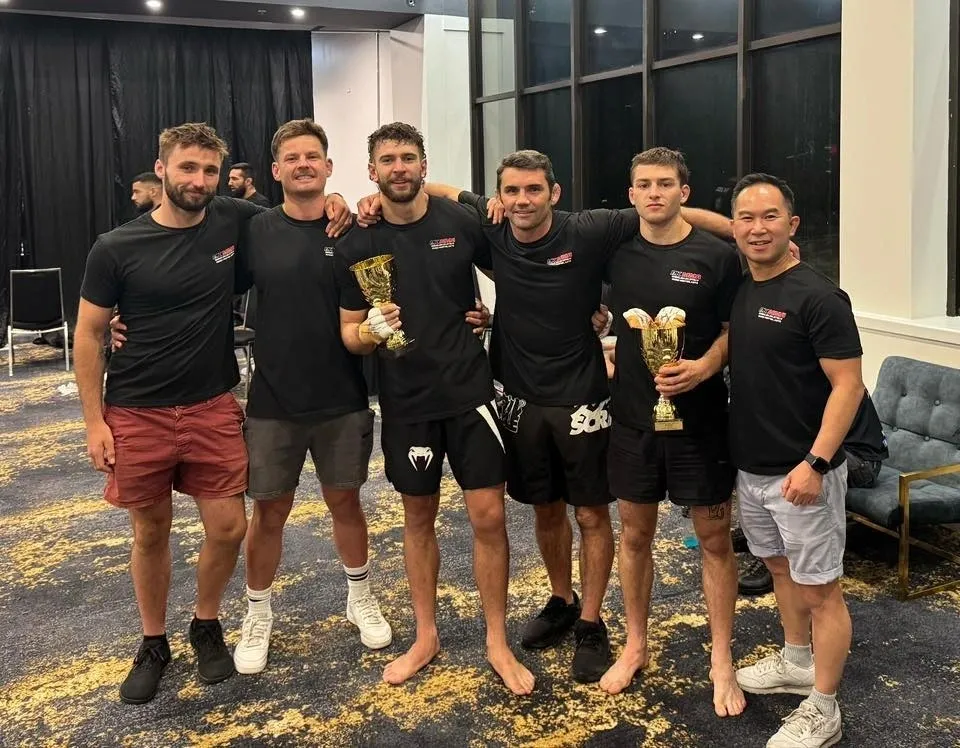
The past two months have been a testament to the relentless dedication, discipline, and sacrifices that are required to step into the cage and compete at the highest level. Every session, every drill, every ounce of effort was focused on building not just the physical strength but also the mental fortitude and technical precision needed for Saturday’s fight. I’ve never seen such unwavering commitment from my fighters, and as a coach with nearly 20 years of experience working with national champions and an amateur world champion, I can say without a doubt that this level of preparation is unparalleled. Since moving into our new facility just eight months ago, the growth we’ve experienced as a team has been nothing short of remarkable. The environment, the resources, and the relentless drive of our fighters have elevated us to new heights. What you’re seeing in the gym isn’t just about physical conditioning—it’s about mental resilience, strategic thinking, and honing technical skills down to the smallest detail. It’s about focusing on every aspect, from perfecting the basics to refining complex techniques, all while pushing the limits of what we thought was possible. This fight was the culmination of countless hours spent sharpening every tool in our arsenal, and on Saturday night, that preparation paid off. We didn’t just work hard—we worked smart. Now, the world has seen what we’re capable of. This victory is the result of true teamwork, unbreakable focus, and a level of preparation that speaks for itself.
The Five fastest ways to derail your mma career
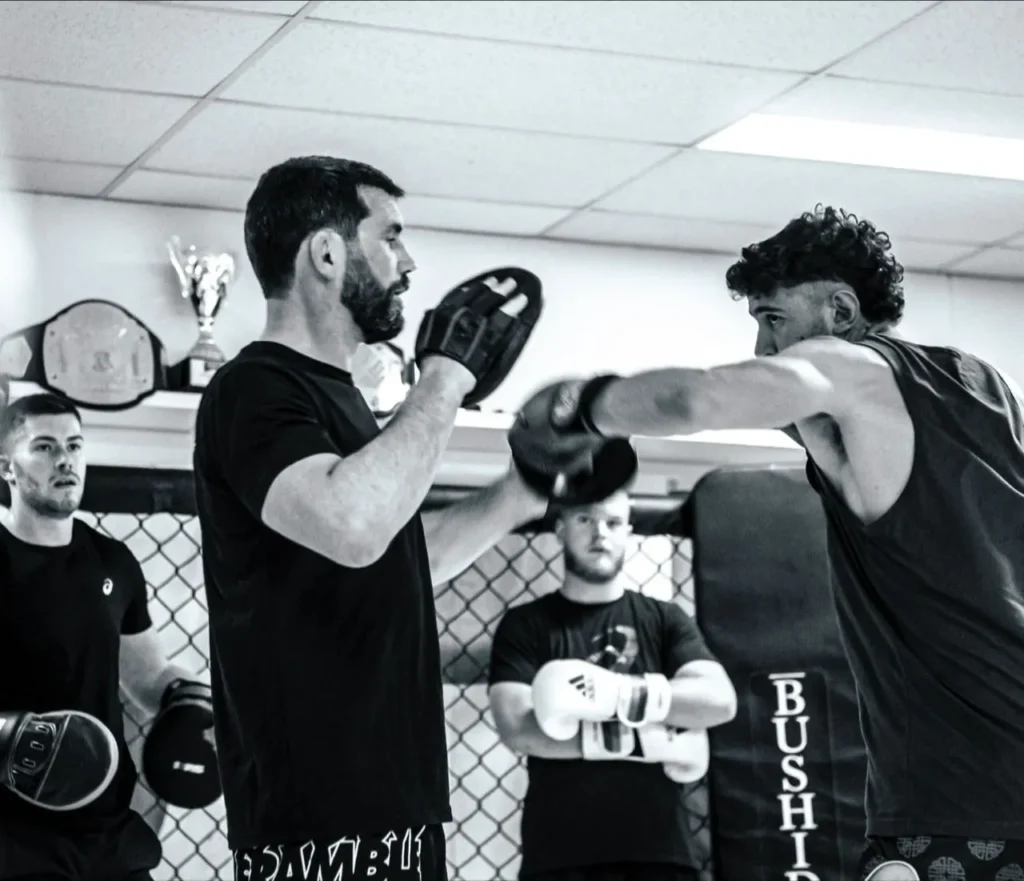
1 – Take time off after your fight to relax, don’t bother turning up to help your training partners get ready for their upcoming fights. Reality – Your coaches probably will never put much effort into training you again now that they see you lack commitment. 2 – Stop following the advice of your coaches and instead start listening to your mate or uncle who used to do karate back in the 70s Reality – Even with the widespread popularity of mma these days qualified coaches are still rare to find. If you find a good coach who has legitimate mma experience, has a proven track record of training good fighters then you already have a massive advantage over your opponents. Now all you have to do is follow their advice and try to politely ignore everyone else’s opinion. 3 – Base your training program on what you see the famous ufc fighters doing on Instagram rather than listening to your coaches Reality – Everything you see online is to build ‘likes, engagement & followers’. Real training is hard and boring. Leave the tik tok dances and comedy skits to the social media experts and stay focused on your goal. 4 – Leave your current gym and go train at another gym because they look good on instagram. Reality – The popular gym already has a team of members who’ve been there from the beginning building it up from the foundations. They probably have a new Instagram convert turn up once a week trying to prove themselves. 5 – Stop turning up for classes and instead just turn up for sparring & open mats or if you think someone will hold pads for you. Reality – Unless you’re already an elite wrestler, high level striker and bjj black belt with extensive competition experience in each area you probably have still a lot to learn in each of these areas. Experienced coaches probably won’t take you seriously if you aren’t mature enough to identify the weaknesses in your skill sets & aren’t putting in the work to improve.
Why it’s better to have a coach who has had fight experience.

Obviously there are exceptions, there are people who have a very deep understanding of the technical side of mma without ever having stepped foot in the ring. However, my problem is that mma tends to attract a lot of clowns who manage to trick fighters into hanging around with them and fighting tends to filter these people out. Do you need to have been a fighter to be a good coach? When this subject is brought up people will always bring up the examples of high level coaches who never had any fight experience themselves such as Cus damato or Greg Jackson. However I see these coaches as the exception rather than the rule, for every one successful coach who didn’t have fight experience there are many more with no experience and sketchy credentials who somehow convince their students to get into the ring. There are various reasons for why mma coaches in the past didn’t have fight experience. MMA is a relatively young sport so for many coaches there just wasn’t the opportunity to fight or compete when they were in their prime. When I had my first amateur mma fights in 2000 there were very few coaches who also had fight experience around. When you look at the vast majority of successful fighters you will see that they are trained by coaches who have legitimate fight experience rather than just theoretical knowledge. Although it’s obviously possible to coach successfully without fight experience I find that more often than not coaches make up for this lack of experience by creating a mythical background around themselves that convinces the eager young fighter to follow their every word without every questioning the validity of what they are learning. Another reason is that sometimes the best fighters don’t make the best coaches. I definitely agree with this. The best fighters usually are able to pick up skills and techniques very quickly and therefore often lack the patience to break down and coach these skills to less talented or less experienced novice fighters. Coaching is a skill that needs to learned and practiced just like any other skill. Often a fighter feels that once he’s had a successful fight career he can just lazily turn up to the gym and show what he knows and that’ll be enough but usually this doesn’t work well. I can say that there are many things that I wouldn’t understand about fighting if I hadn’t had a lot of fight experience myself.What it feels like on the weeks leading up, what it feels like to walk into the cage, how you feel between rounds in a tough fight and what you want or need to hear after a win or a loss. The problem with coaching when you haven’t fought is that you don’t know what you don’t know. There are many hypothetical techniques, tactics and strategies that should work in a fight because they work well in training or sparring but a real fight is a much different thing. If you have real fight experience you will realise this whereas inexperienced coaches usually have to figure it out the hard way.
Black Belt Anniversary
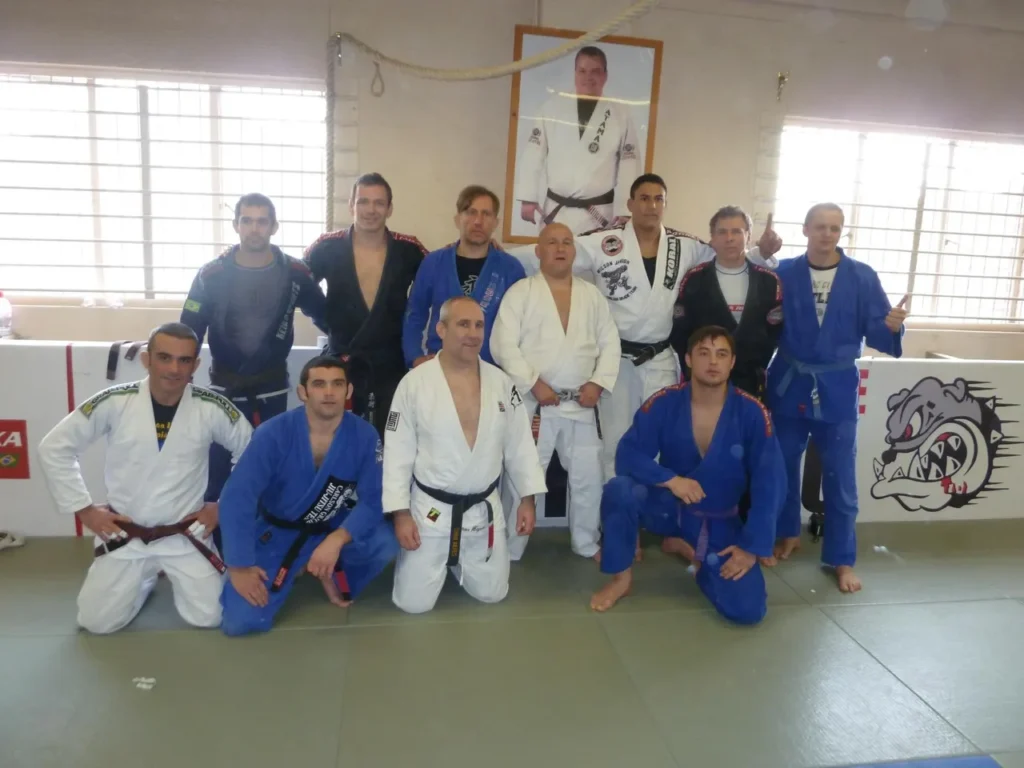
13 years ago today I received my BJJ black belt. Approximately 12 years before that I did my first ever BJJ class at the Budokwai dojo in London. Learning martial arts is a lifelong journey. It’s important to have goals but also important to remember that you’re never finished and there’s always more to learn and more ways to improve what you’re already doing and what you’re teaching. I’ll see everyone on the mats at DKMMA today for the 6pm class for more training and rolling.