
The Benefits of Brazilian Jiu-Jitsu for Kids
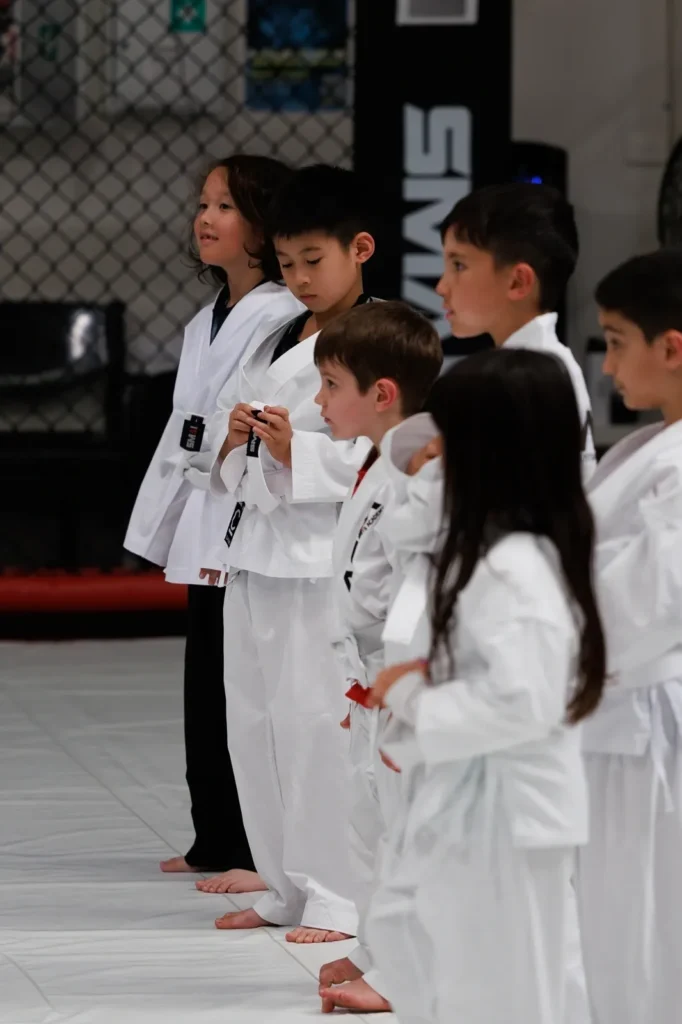
In today’s fast-paced world, parents are constantly seeking activities that not only keep their kids physically active but also foster important life skills such as discipline, confidence, and resilience. Brazilian Jiu-Jitsu (BJJ) has emerged as a popular choice for many families, offering a unique blend of physical exercise and mental development. In this article, we’ll explore the numerous benefits that Brazilian Jiu-Jitsu provides for children, from improved fitness to enhanced problem-solving abilities. Physical Fitness: Self-Defense Skills: Discipline and Focus: Problem-Solving and Critical Thinking: Building Confidence and Resilience: Brazilian Jiu-Jitsu offers a wide range of benefits for children, from improved physical fitness to enhanced mental and emotional well-being. By participating in BJJ classes, kids develop important life skills such as discipline, focus, problem-solving, confidence, and resilience. Whether they’re looking for a fun way to stay active or seeking practical self-defense skills, Brazilian Jiu-Jitsu provides a rewarding experience for children of all ages. We have Kids BJJ Classes at Australian Combat Sports Academy every Monday at 4.15 pm & Saturday Mornings at 10.15 am. Book your kids in today to unlock the benefits.
How long does it take to get Good at Brazilian Jiu-Jitsu?
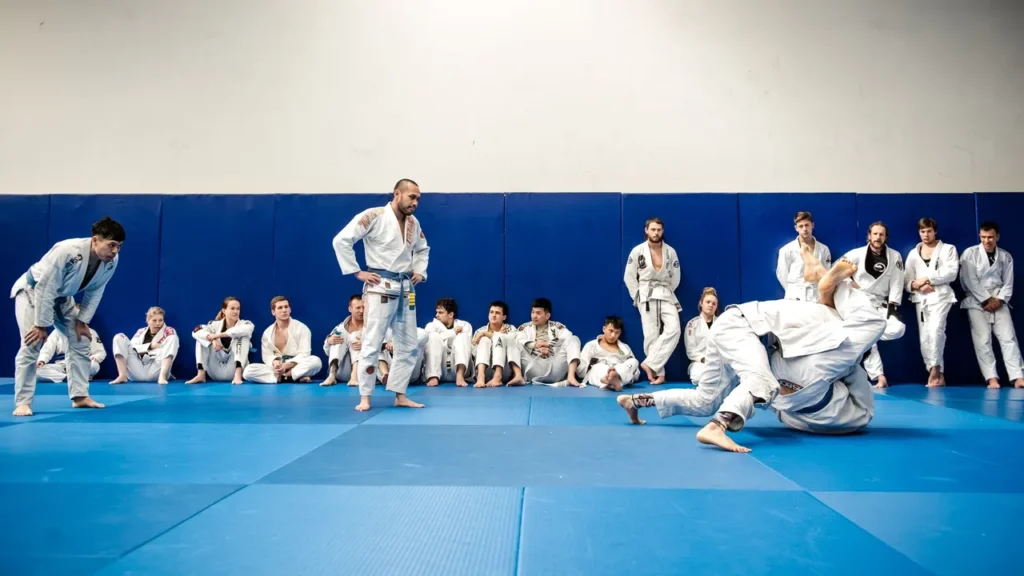
Recently I was asked an interesting question by a new student. This student had considerable experience in other martial arts and had just completed the trial week of our BJJ program. He had enjoyed his training over the week and was excited to continue. He approached me at the end of the class and asked ‘ How long does it take to get good?’ Since becoming a full-time coach I’ve spent 100’s of hours attending Martial Arts and Fitness business courses focusing on Marketing, how to convert trials into students, upselling, and many other related topics. I knew there was a perfect way to ‘re-frame’ the question, get him signing up, and resulting in a high five and three-year commitment to getting his black belt, however, the question came at the end of a long week of tough sessions, teaching classes, training fighters and also working hard on my training so I gave him the honest answer. It might take your whole lifetime to get good and even then that might not be enough. What I meant is that Jiu-Jitsu isn’t a sequence of secret moves that you can memorize and then you’ll be invincible and receive your black belt in three years. It’s tough, you learn the moves but your training partners learn the moves too so they can shut you down then you keep battling back and forth night after night, week after week for years and years until eventually one of you quits. This is the reality of Jiu-Jitsu training that separates it from many other martial arts. It is relatively ‘safe’ so you can go pretty hard almost every time you train without needing to pull your punches. You cannot comfort yourself by telling yourself that I would’ve won that match if I’d hit him with my power kick. You will get tapped out a lot on your way to getting a black belt and you need to develop an ego that will allow you to deal with this short-term inconvenience for your long-term benefit. I also explained to the new student that even though it sounds hard the training is fun, and that’s why people stick to it. Before long you forget about the far off goal of getting a black belt and just enjoy the process of getting on the mat and testing yourself and your skills. Afterward, though I realized that there is another way to look at the question “How long does it take to get good at Jiu-Jitsu?’ This is an interesting question because it’s very subjective, one person’s idea of ‘Good at Jiu Jitsu’ may be very different from others. Some may think being good at Jiu-Jitsu means winning a world title at the Black Belt division whereas another may define it as the ability to defend yourself. Very few people get involved in Jiu-Jitsu because they want to win world titles. Most people begin training because they want to get fit, lose weight, or learn self-defense. My definition of being ‘good’ at Jiu-Jitsu is simple. Can you defend yourself and defeat a larger and stronger opponent using Jiu-Jitsu techniques? If you can then your training has worked. One of the strengths of Jiu Jitsu compared to other martial arts is that it is possible to achieve this goal in a relatively short time (6 months to 1 Year). With other fighting styles, it is much harder to achieve this goal. Styles like boxing or karate take much longer to get the same result. It’s possible that some students can hit very hard and defend themselves after six months of boxing or karate training but it’s always difficult to say if that is due to the training they received or just down to their natural power. With Jiu-Jitsu, the results are very consistent. Everyone can learn the same basic strategy and the techniques aren’t complicated. Another way of looking at this question is relevant to fighters and martial arts from all styles and backgrounds. The important goal is not to just get ‘Good’, the goal is to keep continually improving. To get better than you were last class, or last week last year, or in your last tournament. Even if you’re winning every match, is there anything you could be doing better? Making that armlock tighter, finishing that sweep, or improving defense. So in short it should take around six months to one year until you can defeat an average untrained opponent using Jiu Jitsu (Provided you are being taught correctly and are training consistently) however you can spend your entire lifetime improving and perfecting your Jiu Jitsu. BJJ Training Melbourne
Starting BJJ in Fairfield: 5 Tips for Beginners at DKMMA Melbourne.
Starting your Brazilian Jiu-Jitsu journey can be intimidating, especially if you’re looking for the right environment in Melbourne’s Northern Suburbs. At DKMMA in Fairfield, we see new students from Northcote, Ivanhoe, and Alphington every week who have the same questions. White belt is the make or break stage in your Martial Arts journey. BJJ has a very high drop off rate and the majority of people who begin training don’t make it past the three month mark. There are a variety of reasons for this but quite commonly students quit because they feel they are not making any progress.There are several common problems that I see with most beginner students and in this article I will offer possible solutions that will help you improve and make progress in your martial arts journey Some Beginners will never suffer from these problems, particularly so if they are athletic or have a background in other combat sports. They may not get exhausted or stuck in bad positions when rolling with other beginners, however, I think its actually beneficial for students to go through this frustrating process and to get used to it. This is something you will have to experience again and again throughout your training career. The sooner you can get comfortable with being uncomfortable the more benefits you will get in the long term. Gassing Out… The first problem for many beginners is lack of fitness leading to exhaustion during sparring. Don’t base your entire BJJ game around fitness and outworking your opponent at the expense of proper technique, however, it will always help to improve your fitness if you feel you are struggling during sparring rounds.To achieve this I recommend simple solutions such as getting up half an hour earlier and going for a run, bike ride or swim twice a week. Yes there are more scientific and technical ways of maximizing your fitness but as a White Belt you aren’t trying to win the Olympics just attempting to build your gas tank so you can roll at a sensible pace without feeling completely exhausted and having to sit out rounds. Another tip to avoid gassing out is to make sure you roll at a pace that is suitable for your fitness level. If you find you are breathing heavily and exhausted within 30 seconds you need to slow down and concentrate on what you are doing. Don’t waste energy relentlessly squeezing your opponents head when you should be figuring out how to move your hips and legs to escape. Getting Stuck in Bad Positions… This is one of the most common questions I get asked by beginners. They get stuck under side control or Mount for every round of sparring and never get a chance to use any of the techniques they have learnt.My first piece of advice is to learn and drill the escapes from these positions then practice them in isolation sparring. This involves rounds of starting from side control and once you achieve an escape or reversal resetting and doing it again. This method will improve your escapes 100%.Another useful idea is to occasionally just ask your training partners to reset once you’ve been stuck under side control or mount. Getting better at escaping especially against heavier and more skilled opponents is a time consuming process and you can’t expect results overnight. For this reason I would advise new students to just ask their training partners to reset in a different position and work from there rather than wasting valuable training time.At a slightly higher level the biggest key to avoiding getting stuck in bad positions is to avoid ending up there in the first place. The key to this is Guard Recovery and Guard Pass Prevention. The better you get at preventing getting your guard passed the less time you will be spending in bad positions. As mentioned previously this is a long term process but the earlier in your grappling career you get started on it the better results you’ll get.I discuss the difference between training and competition in this Article Can’t get any Submissions… Another problem is that the typical BJJ student learns or is at least exposed to dozens of submissions in their first few months of training but when they try to apply these techniques in live sparring they never work. This is because all the other students have also been taught the same techniques during the same period and so they are aware of them and are ready to shut them down. This often leads to the less than ideal ‘Youtube Arms-Race’ scenario where ambitious White-belts will scour the internet for secret techniques to catch their training partners unawares rather than just focusing on learning how to do the fundamental techniques properly.I advise beginners to follow the BJJ maxim – ‘Position before Submission’. Focus on building your game, at least in the early stages, of getting to solid control positions such as Side Control, Mount and Back Control and then the opportunities for submissions will begin to present themselves. I also encourage building your game around submissions where you will not lose position if it doesn’t get the tap. For example if you cant finish the Rear Naked Choke you are still in Back Control so you get to try it again and again until the end of the round. Can’t remember their techniques when Sparring… As previously mentioned during your first few months of training you will be exposed to what seems like an endless amount of techniques. It is usually too difficult to remember everything you learn and it will be almost impossible to recall and use it effectively when needed in live sparring.The first stage in the solution to this problem is to try to retain as much information as possible. Make notes on everything you learn as soon as possible after learning it. Drill the technique as much as possible after your Instructor shows it then try to drill it again a few times later
Building A Good Team
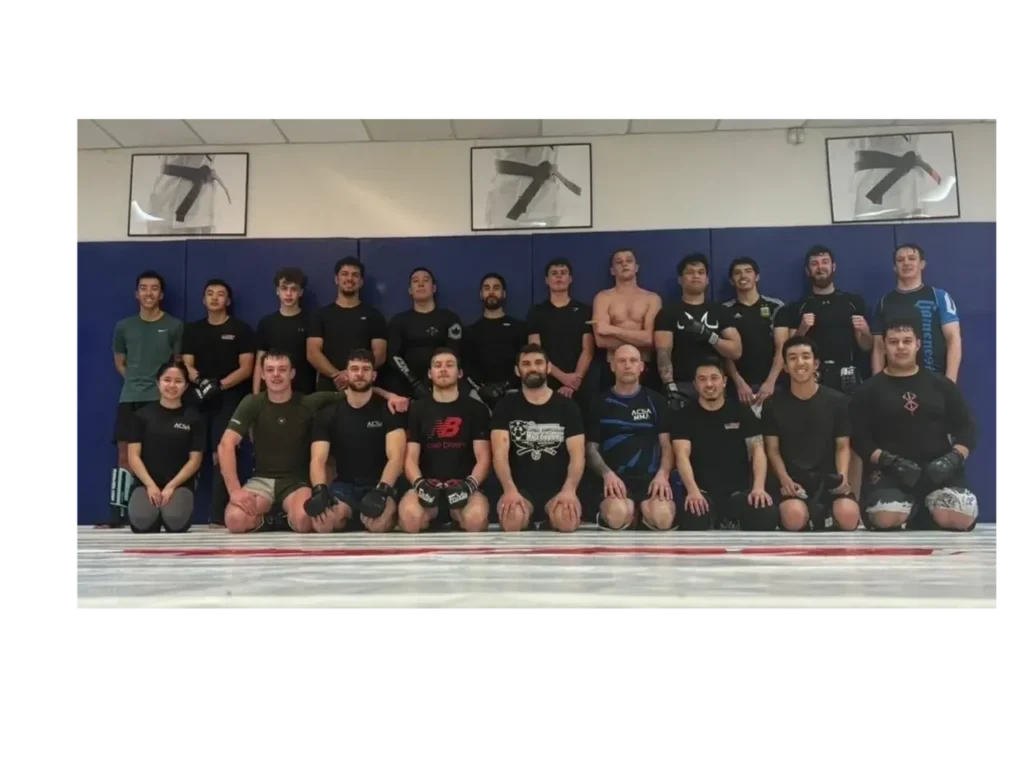
There are two main roles for a BJJ or MMA coach. First teaching the techniques, tactics, and strategies of BJJ & MMA and second creating the correct training environment for students to improve. Most aspiring coaches myself included focus on the first part. They think I will be a more successful coach if I can learn as many moves as possible or memorise as many details or intricacies about those techniques. It certainly helps to have a deep knowledge and understanding of the sport but over the years I’ve realized that the second skill is more important. The aspiring student needs instruction from a qualified coach but more importantly, they need access to good training partners in order to improve. Good training partners enable you to improve and reach your potential. My number one role as a coach is to create a room full of good training partners. This is easier said than done and requires constant supervision and improvement. Over the years I’ve realised that it comes down to ‘getting the right people on the bus and getting the wrong people off the bus’. Make sure that everyone in the room has the same goals and objectives with their training. Just a few lazy students or people with the wrong attitude can cause problems for everyone. It’s easy to just turn a blind eye but the coach’s job is to call out the wrong types of behaviour and uphold the expected standard. As a coach you can’t be everyone’s best mate but if you want to get results in your training you need coaches who are willing to make the tough decisions that are in the best interests of the team.
Start your MMA Journey today! Beginners MMA Training
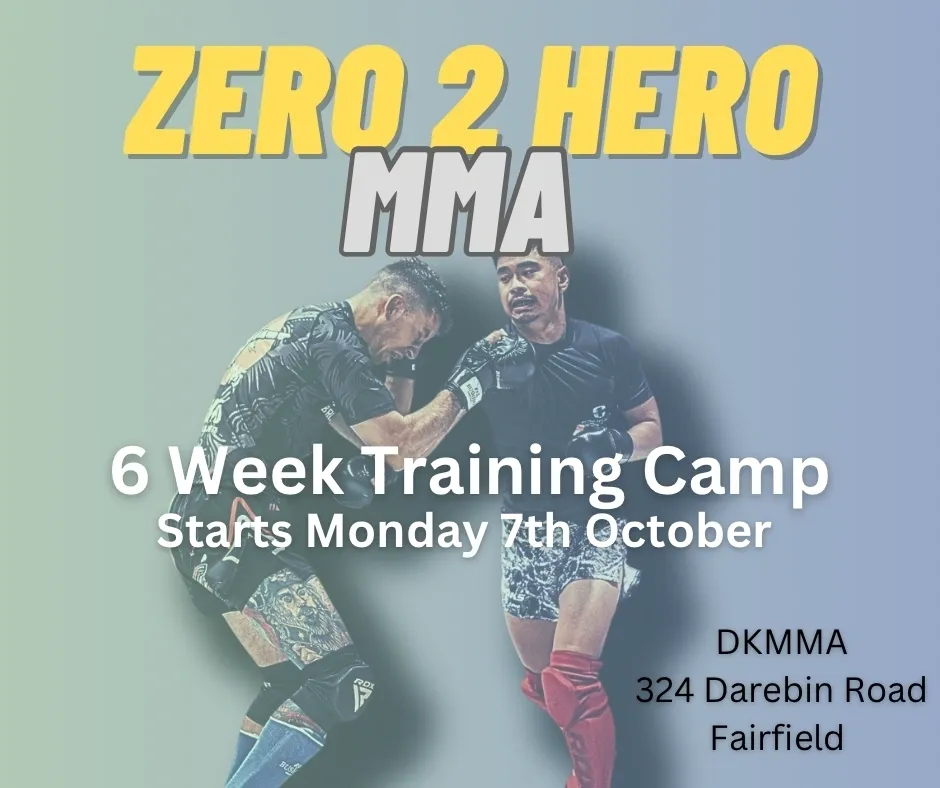
Always wanted to LEARN MMA and test yourself in competition? Here is your opportunity! The Zero 2 Hero 6-Week MMA Training Camp is back! Contenders will train in five sessions per week for 6 weeks learning the fundamental skills of Mixed Martial Arts. 📷 Start Date is Monday 7th October! They will then fight on our Bushido Amateur MMA event at the end of the program. The matches are held under a modified ruleset, allowing the participants to gain valuable experience while minimizing the risk of injury. This program is limited to Ten Participants. 📷 We are now taking bookings for the next Contenders program. This course is suitable for complete beginners of all fitness levels. Once you complete the course you will be given an opportunity to compete in our Bushido Amateur MMA competition. WHAT DO YOU GET? 📷 6 weeks of training 5 times a week! 📷 High-level coaching in BJJ & MMA from our highly experienced team! 📷 MMA Training uniform! 📷 Train alongside our current competition team! 📷 Opportunity to Compete in Bushido Amateur MMA! WHO CAN JOIN? We are only taking 10 contenders! Open to people of any skill and fitness level. Ideal if you have done zero or very little training before. ================================= What are you waiting for? Book your Spot here : MMA Training Melbourne Beginners MMA Training
The importance of your BJJ Team to maximise your Training
One of the recent trends I’ve noticed is a lot more BJJ students bouncing around from gym to gym. Back in the day, most people stuck with the first team they joined. That was partly because there were fewer gyms to choose from, and the culture in BJJ was more like a tight-knit community—almost like a tribe. But these days, it seems like people switch gyms every 6 to 12 months, and that’s becoming more common. Now, don’t get me wrong—there’s nothing wrong with switching gyms if there’s a good reason. Maybe your first gym is a disaster with a coach who isn’t legit—someone who’s always late or showing up drunk. Or maybe your gym closes down, and you have no choice but to find a new place. There are plenty of valid reasons to change gyms.But what I’ve noticed more and more is that a lot of people aren’t switching gyms for those kinds of reasons. Instead, they’re doing it because of what’s blowing up on social media. They train at one gym for a year or so, then see another gym getting a ton of likes on Instagram and decide to jump over there. A year later, when the hype fades, they’re already looking for the next trendy gym to check out. This behavior is driven by FOMO (fear of missing out) more than anything. Instead of focusing on improving their skills, they’re more concerned with being part of whatever is hot right now. It’s all about the buzz, not the actual progress. As a coach who’s been in BJJ for over 25 years, I get it—sometimes you need a change, or maybe you want to try something new. But from what I’ve seen, constantly switching gyms isn’t usually the best way to get better. To really succeed in BJJ, you need a coach who’s willing to invest time in you and help you improve. And that’s hard to do if the coach doesn’t think you’re sticking around long enough to make real progress. It’s tough to build a strong relationship with a coach if you’re jumping around every year, and without that trust and consistency, it’s hard to get the results you’re after. So, if hopping from gym to gym and chasing the latest social media trend is your thing, that’s cool. But if your goal is to actually get better at BJJ, you’re better off finding a gym where you can settle in, build relationships, and work closely with a coach who’s invested in your development. BJJ Training Melbourne
Why Fighters must train in regular classes MMA Training Melbourne
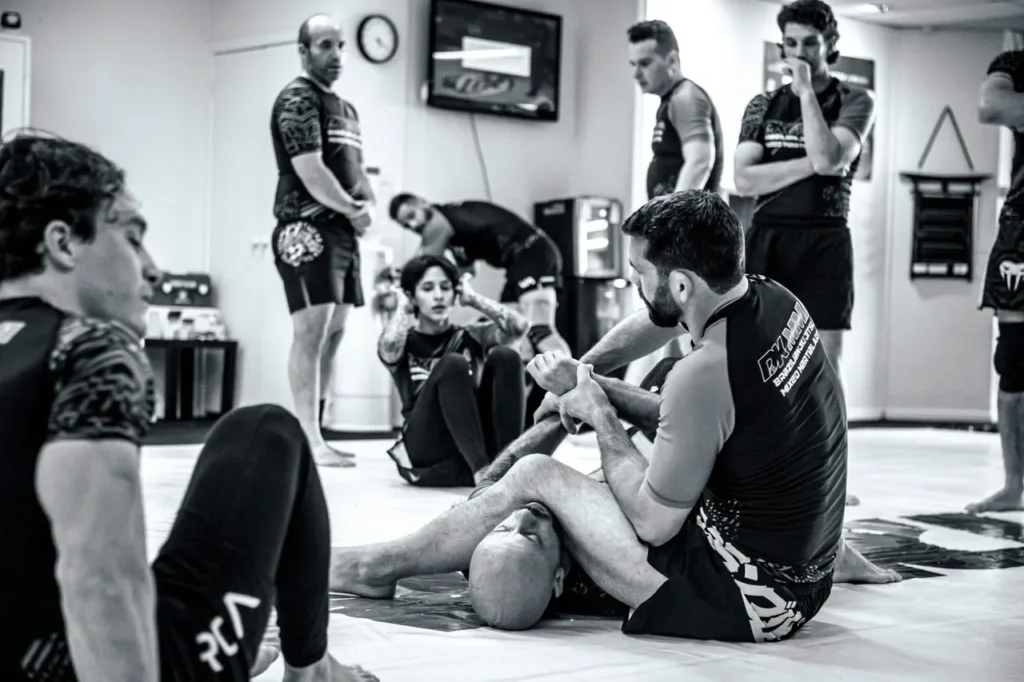
Why do some MMA fighters have successful careers while others start off well but then quickly go downhill? I’ve seen fighters have a lot of success early in their career, then they stagnate, they stop improving and gradually get worse and worse results. How can we explain this deterioration of skill level and results? There are several factors that can have a bad long term effect on a fighters career. The Fight Camp Problem: One common thing I see with many fighters is that once they have a little bit of success they stop attending regular classes and instead just want to do their own fight training, They just want to do their own padwork and sparring rather than attending classes like the regular students, They see top professionals like Floyd Mayweather training like this so they assume that’s what they should be doing too. They also think they’ve become too good to train with the regular students and that all the training should be focused around them and their competition goals, The reality is that if you are already an elite world champion like Mayweather then it makes sense not to do regular classes. There’s a point of diminishing returns, time is better spent doing training that is solely focused on you. Also, if you are already a world champion you can afford to pay your trainers and sparring partners a full time salary so they can work around your schedule, Why do fighters think they don’t have to come to regular classes? They think that training in the regular classes with non fighters will hold them back. This is not true. I have seen many recreational students who have a much higher skill level in specific areas than the professional fighters. The fighter would actually benefit tremendously from training and sparring with these non fighters. They believe training should be all just focused around them, This is completely unrealistic, Even if the fighter is paying his trainer 10-20% of the fight purse, it is very unlikely that any decent or suitably qualified trainer will be willing and able to devote all their time over the course of an 8 week training camp. They think they already know everything that’s being taught in class so there’s no point wasting time practicing it again. This is usually never the case. There is always more to learn and more skills to be refined and improved upon. Disadvantages of only doing fight training: There are several common patterns which I notice from fighters who only do ‘Fight Camps’ rather than regular training. These include stagnation and deterioration of ability. The fighter is happy in the short term because he gets to train on his own terms. It’s all about him, he feels like a professional and builds his ego but it’s a disaster long term, The fighter may be able to maintain their current level of skill, technique and fitness but is not improving and will not be capable of beating the next level of opponent. The fighters coach who was probably responsible for the initial success doesn’t want to work with the athletes who don’t attend his classes regularly as this sets a bad example to the other students. This often leads to the fighter finding other coaches who are willing to work them but usually the replacement coaches are inexperienced and just trying to make a name for themselves which will ultimately do more harm than good to the fighters career. Why should fighters keep training in classes? Its very important to continually keep improving and updating your skills. MMA fighting is a game of levels. If you beat a fighter of one level then you will have to move up to the next level to keep progressing your fight career. The level of skills and ability that was required to beat your previous opponent will not be enough to beat your next opponent. This is especially the case in the sport of Mixed Martial Arts where the overall skill level rapidly increases from year to year. The level of skill required to win a state or national title even a few years ago would likely not be enough now. MMA Training Melbourne mma classes melbourne
Learning BJJ without getting Injured BJJ Training Melbourne
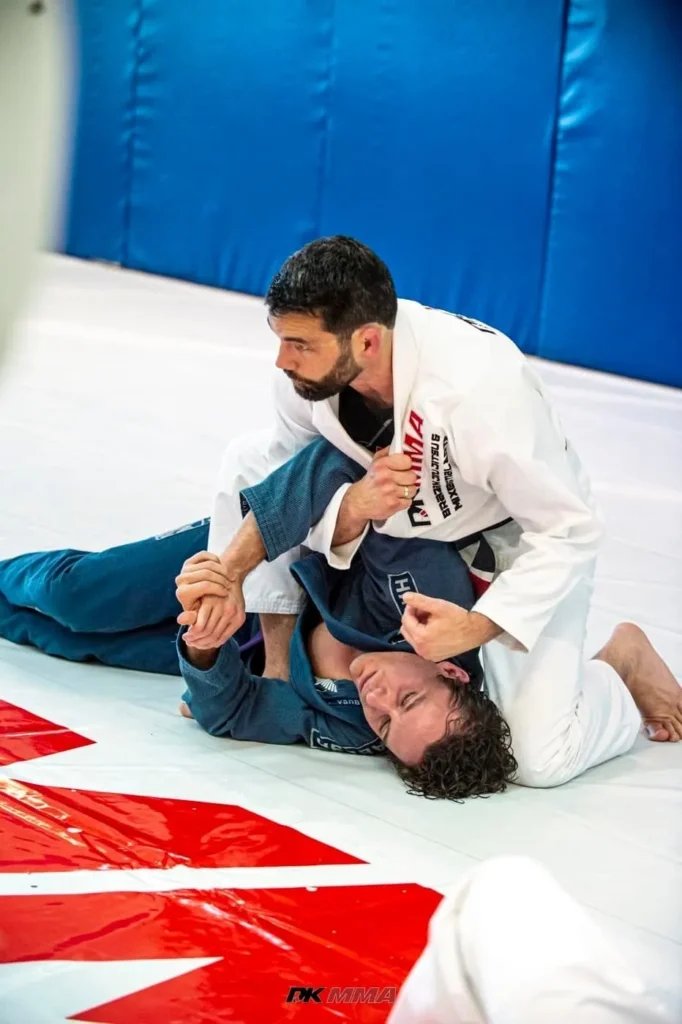
If you’re frequently getting injured in BJJ, you’re probably doing something wrong. BJJ is one of the safest martial arts, although some people are more injury-prone than others.BJJ comes from Judo, which was itself based on Japanese Jiu-Jitsu. Judo was created by removing dangerous techniques from traditional Jiu-Jitsu to make it safer and more practical for full-resistance training. The goal was to make sure people could train at a high level of resistance to improve their skills. When Judo spread to Brazil, the Brazilians made it even safer by focusing more on the ground game, where injuries were less common, and reducing the emphasis on standing techniques, which are more injury-prone. This led to the creation of Brazilian Jiu-Jitsu. What sets BJJ apart from other martial arts is that you can spar or “roll” using full resistance, without risking serious injury. This allows you to learn and improve quickly. Brazilian Jiu-Jitsu is one of the few martial arts where you can practice techniques at full intensity during training without risking injury to your partner. You can apply a chokes and armlocks exactly as you would in a competition or real fight, and your partner will tap out once it’s fully locked in (if they’re smart).This level of realism isn’t possible in other martial arts with kicks to the head or elbows to the face—no matter how much you practice them, you’ll never fully know what it feels like to land them until you’re in an actual fight. In sparring, you’re always holding back. This is what makes BJJ so effective: you get to practice techniques for real, against resisting training partners, every day. In contrast, many other martial arts spend a lot of time teaching techniques that are too dangerous to use in sparring with teammates. As a result, the first time you apply them at full intensity might be in an actual fight, which can be risky. Don’t push too hard too often. If you’re caught in a submission and can’t escape,you should be smart enough to recognize the danger, tap out and ask for feedback, instead of trying to power out of it. Your training partner won’t be impressed by your strength or stubbornness; they’ll appreciate you taking the time to learn proper technique. BJJ Training Melbourne
Real BJJ & MMA Coaching MMA Training Melbourne
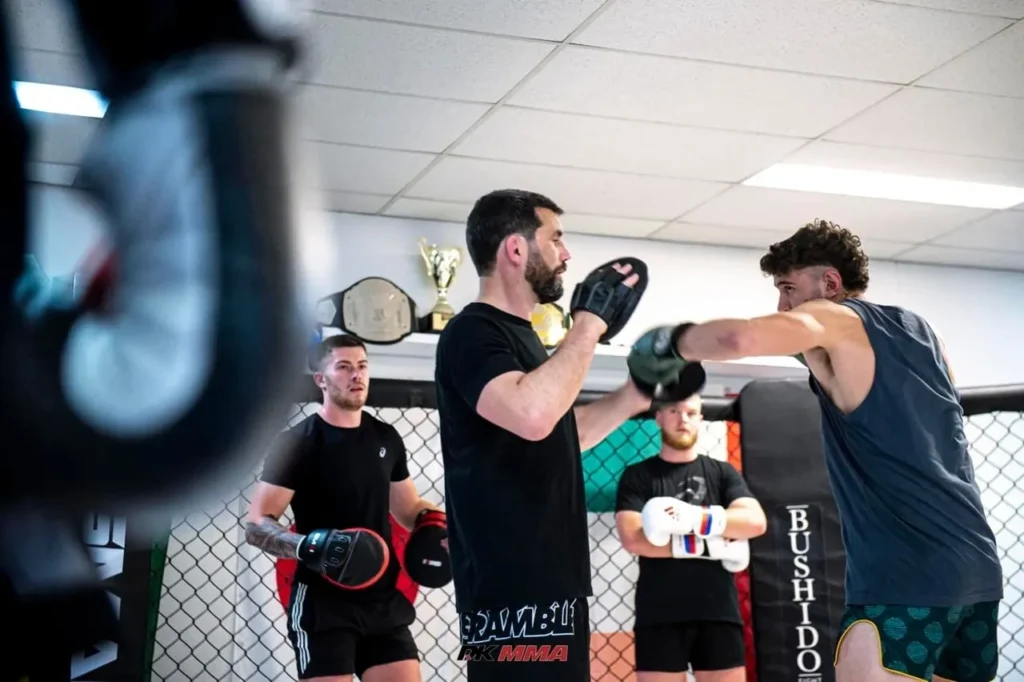
Being a good coach goes beyond teaching techniques—it’s about pushing people to reach their full potential. Teaching the moves is the easy part; motivating and challenging people to do what I know is necessary to improve can sometimes be very draining. Sometimes I feel guilty pushing students to compete, especially those who show little interest in it. But over time, I’ve realized that competition is one of the fastest ways for anyone to improve. I remind myself that my job is to help students grow. I can’t do that by always making things comfortable. The real job of a coach is to encourage students to step outside their comfort zones and challenge themselves. It’s easy to motivate people by telling them they’re improving , but that kind of positive feedback only lasts so long. To see real, lasting improvement, students need concrete evidence of their growth, and that only comes through pushing their limits. This is the most important lesson I’ve learned as a coach: it’s not just about showing students the right techniques. The most valuable thing I can do is help them believe in themselves and push past their limits to reach their true potential. MMA Training Melbourne
Real MMA Training MMA Training Melbourne
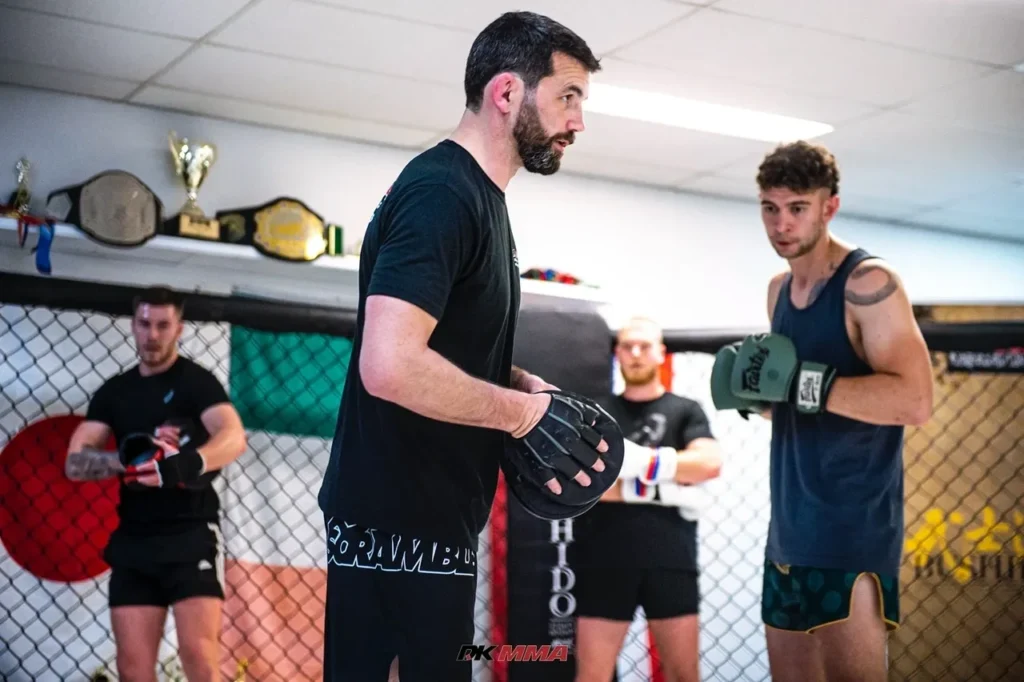
If you want to become a UFC champion, don’t train like one. Despite having more access to information than ever, I still see many fighters early in their careers making the same mistakes. It’s the “UFC Countdown” curse. Back when I was fighting, we didn’t know how to train for MMA. We figured things out by watching videos, reading a few books, and experimenting. Then UFC Countdown came along, but let’s face it—MMA training is not glamorous. Now, with social media, there’s more pressure to create flashy content to attract views. Boring training videos don’t rack up likes on Instagram, and TikTok dances get more attention than grueling workout sessions. But here’s the hard truth: you don’t win fights by chasing likes or posting viral videos—you win them by putting in years of disciplined, consistent training. Don’t focus on what a fighter is doing today. Look at what they were doing 10 or 15 years ago that built the foundation of their success. They were probably doing back to back JiuJitsu classes, hours of bag work, sparring and strength and conditioning with no one videoing it or choreographing it to look good. That’s what got them to the elite level. The training they’re doing now might be the reason they won’t be the champion next year. MMA Training Melbourne